
Robots Get to Work

The Muscle Behind the Machines
Robots are getting a massive upgrade in how they move, and it is all thanks to a huge boom in the robotic automation actuator market. Think of actuators as the muscles and joints of a robot. They are the little motors and parts that let a machine lift its arm, turn a wheel, or make super precise cuts. A new market analysis shows that this industry is absolutely exploding, and it is on track to triple in value over the next decade.
Companies are pouring money into making these tiny parts way smarter, lighter, and more energy-efficient. Instead of big, clunky gears that use tons of power, the newest tech uses smart actuators with built-in sensors that can adjust on the fly. And that’s why it matters. This change means that automation is moving way past heavy factory work. It is opening up massive opportunities in places like healthcare, medical devices, and custom manufacturing. Robots can now handle delicate, complex tasks without breaking things, which means we will see them popping up in everyday life much faster than expected.
Your Next Delivery Might Have Four Legs
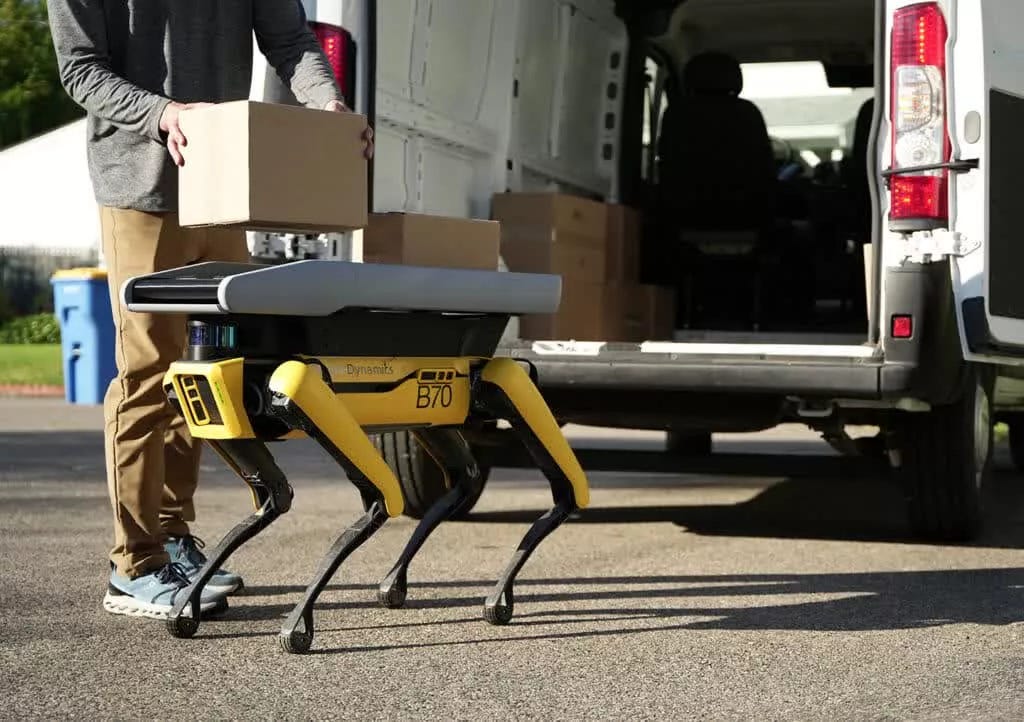
Boston Dynamics is testing their famous robot dog, Spot, as a delivery assistant to help human drivers bring packages straight to your doorstep. They just dropped a video showing Spot stepping out of a delivery van, getting loaded up with boxes on a mini conveyor belt attached to its back, and trotting right up a flight of stairs to drop them off.
This can help you understand where the future of shipping is going. Right now, logistics companies have automated the big warehouses, but the hardest part to automate is the last fifty feet from the delivery truck to your porch. By pairing a driver with a robotic quadruped, the human can focus on organizing the truck while the robot handles the heavy lifting and stairs. They are even testing a version on wheels to make it faster. While a seventy-five thousand dollar robot dog sounds crazy expensive, the company thinks it can increase a delivery van’s package capacity by over thirty percent. They are already planning a major pilot project to deliver two hundred packages a day, bringing us one step closer to fully autonomous delivery fleets.
Meet Your New Surgeon, “Surgie”
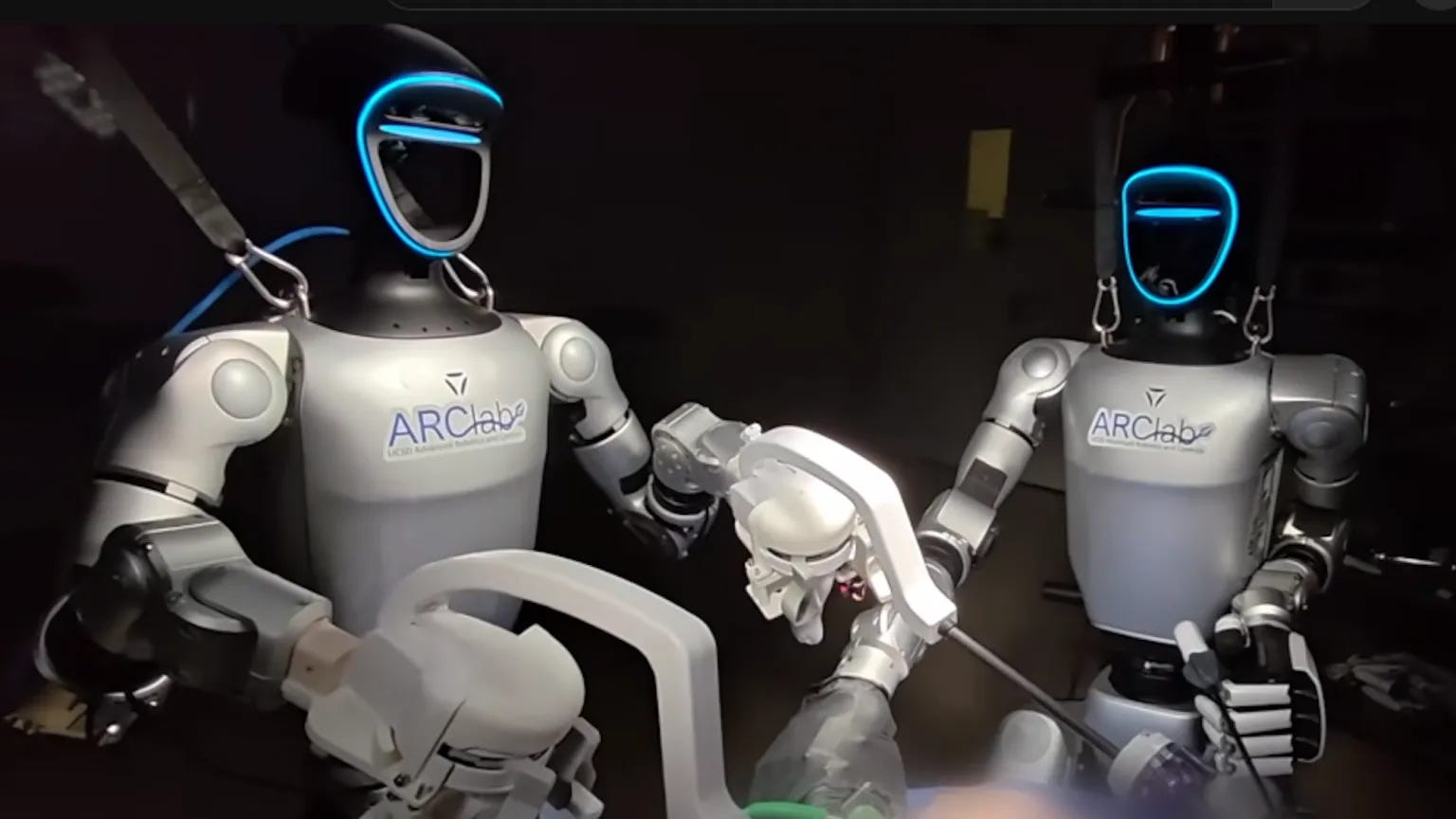
In a massive first for medicine, doctors successfully used remotely controlled humanoid robots to perform surgery. The trial involved removing gallbladders from large mammals, with one operation done by a single robot and a human assistant, and another handled entirely by a pair of five-foot-tall robots nicknamed Surgie.
Here’s what I found interesting about this shift: standard surgical robots are giant, eighteen-hundred-pound machines that cost a fortune and need specialized rooms. These new humanoid surgery bots are light, weighing only sixty pounds, and are much cheaper to build. They did run into a few lag issues and needed to be recalibrated during the test, but the potential is massive. And that’s why it matters. Because these bots are small and highly adaptable, doctors can operate them from thousands of miles away. This means fleets of humanoid assistants could eventually be deployed to battlefields, rural towns, or under-resourced communities where patients normally cannot get access to critical, life-saving surgeries.
Air Conditioning Without the Eco-Guilt

Europe is testing a brand-new kind of air conditioning that does not use any chemical refrigerants. Traditional cooling systems rely on gases like hydrofluorocarbons to chill the air, but these chemicals are terrible for the environment if they leak, trapping heat in the atmosphere way worse than regular carbon dioxide.
So here’s what happened: researchers are trying out alternative tech like thermoacoustic or solid-state cooling to completely eliminate the need for dangerous gases. Instead of compressing chemicals, these systems use things like sound waves or specialized materials that change temperature when exposed to magnetic fields or electricity. It is a massive shift for home appliances because governments are cracking down hard on traditional refrigerants to meet climate goals. If these tests pan out, it means we could soon cool our homes during intense summer heatwaves using eco-friendly climate control systems that keep us comfortable without harming the planet.
Google Opens Up the Android Ecosystem

The Google Play Store is officially opening its doors to third-party Android app stores in the United States starting on July 22, 2026. This massive shift is happening because Google decided to drop its long legal fight against Epic Games over court orders that demand more competition on mobile devices.
Here’s how it works: under the new rules, rival app stores will be allowed to host and list official Play Store apps and games directly inside their own marketplaces. Google will still charge its usual service fees and requires a five-thousand-dollar annual safety fee to prevent malware, but developers now have the freedom to reach users outside of Google’s strict ecosystem. This might work for you if you love customization. It completely breaks up Google’s monopoly on Android downloads, paving the way for more app store choices, better developer freedom, and potentially lower prices on in-app purchases. It is the biggest shakeup to how Android software is distributed in years.
Thank you for joining for todays updates… see you next week.